Source Shockproof Carbon Fiber Insoles for Sports
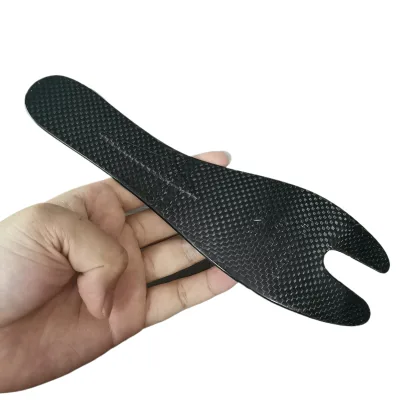
Compare 30 shockproof carbon fiber insoles from verified Chinese manufacturers. Options include T300, T700, and T800 materials offering high strength, arch support, and pain relief for physical and sporting activities; compare the available evidence and request quotations based on your requirements.
Key considerations
Products List


$0.10 - $10.00
Moq: 10




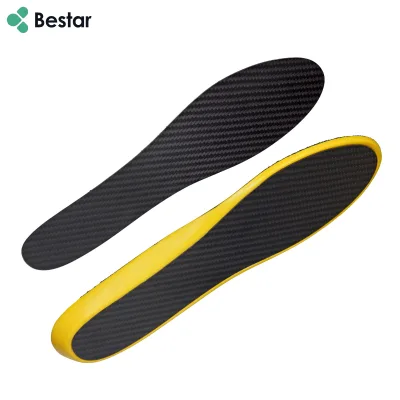
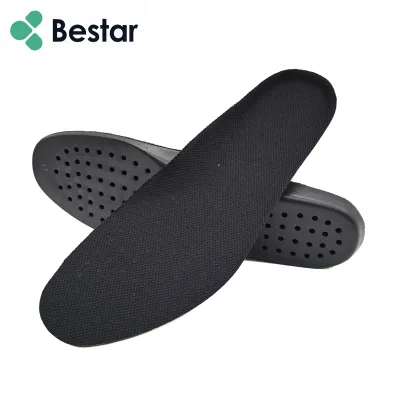


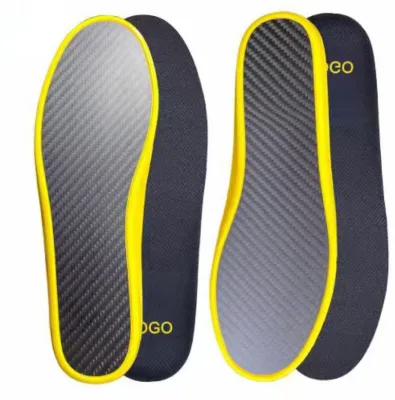
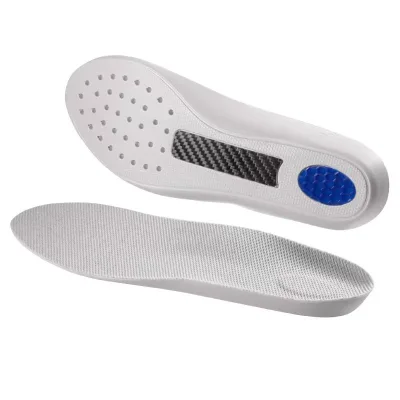
Comprehensive Sourcing Guide
Shockproof Carbon Fiber Insoles Sourcing Guide
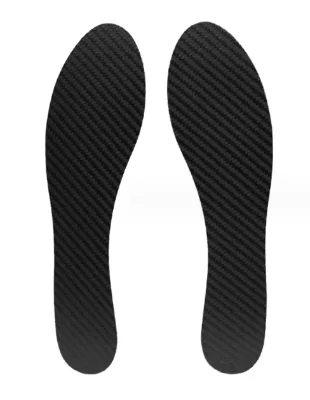
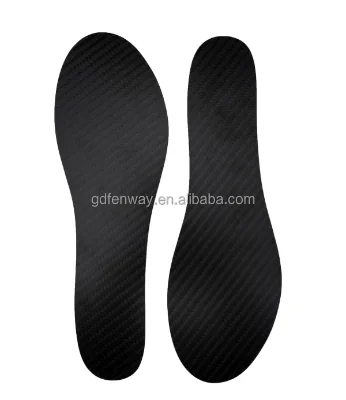
Procurement teams must first distinguish between structural carbon fiber plates and functional insoles, as the supplied data reveals a mix of product types including "Carbon Fiber Insoles" and generic "Carbon Fiber Sheets." Buyers should verify that the specific listing explicitly states "Shock Absorption," "Pain Relief," and "Arch Support" to ensure the item meets the shockproof requirement for physical and sporting activities. Relying on generic carbon fiber sheet specifications without confirming the insole application can lead to purchasing rigid panels unsuitable for footwear integration.
The observed product attributes indicate a strong focus on customization, with options for "Customized Logo," "Custom Size," and "Customized Packing" available from suppliers. However, the data also lists "Single Item" selling units alongside an MOQ of "1000 pairs," creating a potential discrepancy for small-batch buyers. Sourcing strategies must clarify whether the supplier can fulfill sample requests, which are noted as "Free," before committing to the higher volume thresholds required for production runs.
Product Scope and Observed Listing Signals
Buyers should scrutinize the raw material composition, as the market data shows both "Polyacrylonitrile-Based Carbon Fiber" and "Viscose-Based Carbon Fibre" listed for similar products. The distinction is critical because the carbon content varies, with some entries specifying "more 95%" carbon content while others list specific hydrogen and nitrogen percentages. Procurement teams must confirm which precursor material is used, as this directly influences the mechanical properties and the final shock-absorbing performance of the insole.
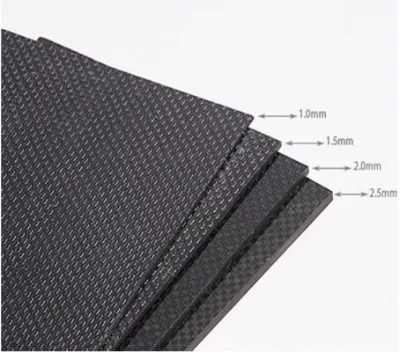
The physical form factor also varies significantly in the listings, ranging from "Filament" and "Chopped Fiber" states to finished "Carbon Fiber Plate" and "panel" shapes. While the core keyword demands an insole, some data points describe "Carbon Fiber Sheet" products with dimensions like "500mm X 500mm X 2mm," which are likely raw materials rather than finished footwear components. Buyers must ensure the selected product is explicitly defined as a "Shoe Insole" or "Comfort Insole" with the correct weave types like "1.5K/3K/4K/15K" to guarantee the intended flexibility and fit.
Technical Specifications to Verify
Verification of the mechanical strength is paramount, as the data lists multiple strength grades including "T300," "T700," "T800," and "T1000." Buyers must confirm which specific grade corresponds to the shockproof requirement, as higher tensile strength does not always equate to better impact absorption for insoles. The "High-Performance Type" and "High-Strength Type" labels are broad, so requesting specific test data for the chosen grade is necessary to validate the product's ability to withstand repeated impact during sports.
Thermal and chemical stability are also key technical parameters that require validation against the provided specifications. The data mentions a "Working Temperature" of "200" degrees and a "Volatile" content of "0," which suggests high thermal resistance suitable for industrial or extreme environments. However, for insoles, the focus should be on how these properties translate to comfort and durability under body heat and sweat conditions. Buyers should verify that the "Matte / Glossy" surface finish does not compromise the friction or comfort required for long-term wear in athletic applications.
Compliance and Safety Documentation
Safety documentation must address the chemical composition of the carbon fiber, particularly the trace elements like Hydrogen at "0.01%" and Nitrogen at "0.02%" found in the data. While these low percentages indicate high purity, buyers need to ensure that the manufacturing process does not introduce harmful residues or volatile organic compounds that could cause skin irritation during prolonged contact. The "0" volatile content is a positive indicator, but formal safety data sheets (SDS) are required to confirm the absence of other hazardous substances not explicitly listed in the product attributes.
Regulatory compliance for footwear accessories often requires adherence to specific material safety standards, though the provided text only references "T300/T700/T800 Customized" as a standard. Procurement teams should not assume these carbon fiber grades automatically satisfy international footwear safety regulations without further verification. It is essential to request documentation proving that the "Carbon Fiber Insole" meets relevant regional safety standards for consumer goods, ensuring the product is safe for "Physical and Sporting Activities" without posing health risks to the end-user.
Cost Drivers and Commercial Terms
The pricing structure is influenced by the raw material type and the level of customization, with observed prices ranging from "0.1" to "51.42" USD. The significant variance suggests that costs are driven by the specific carbon fiber grade, the complexity of the "Custom Size" molding, and the inclusion of features like "Customized Logo." Buyers must analyze whether the lower price points correspond to generic "Single Item" units or if they reflect bulk pricing for the "1000 pairs" minimum order quantity.
Commercial terms are heavily impacted by the packaging and shipping logistics, as the data lists "Hard Outer Packaging Carton," "Sturdy Carton Packaging," and "Customized Packing." The "Single Package Size" varies between "30X10X4cm" and "10X6X4 cm," which directly affects freight costs and storage efficiency. Additionally, the "Shipping Origin" is listed as both "Shenzhen" and "Guangdong, China," requiring buyers to clarify the exact logistics hub to accurately calculate lead times and import duties for their specific destination.
Supplier Qualification and Quality Control
Supplier capacity is a critical factor, with the data indicating a "Factory Area" of "10,000 Square Meters" and "110" employees. These figures suggest a mid-sized operation capable of handling customized orders, but buyers must verify if this capacity is dedicated to carbon fiber insoles or if it is shared with other industrial sheet products. The presence of "Free" samples allows for a preliminary quality assessment, but the supplier's ability to maintain consistency across the "1000 pairs" MOQ must be confirmed through a trial run.
Quality control processes should be validated against the specific product model "SY-98694" or "top carbon insole" to ensure traceability. The data mentions "Customized Packing" and "Customized Logo Accept," which implies a flexible production line, but this flexibility must not come at the expense of rigorous inspection protocols. Buyers should request a quality assurance plan that details how the "High-Strength Type" and "High-Performance Type" attributes are verified during production to prevent defects in the final shock-absorbing product.
Long-Term Procurement Checks
Sustainability and supply chain resilience are long-term considerations, especially given the "Polyacrylonitrile-Based" and "Viscose-Based" material options. Buyers should assess the supplier's ability to source consistent raw materials over time, as fluctuations in precursor quality can alter the "C Content (%)" and mechanical properties of the final insole. Establishing a long-term contract requires confidence that the supplier can maintain the "T300/T700/T800" standards without compromising on the "more 95%" carbon content requirement.
Performance monitoring over the product lifecycle is essential to validate the "Shock Absorption" and "Pain Relief" claims in real-world conditions. Since the data lists "Application" as "industry" and "Physical and Sporting Activities," buyers should implement a feedback loop to track insole durability and comfort retention after extended use. Regular audits of the "Factory Employees" and production processes will help ensure that the "Custom Size" and "Customized Logo" features remain consistent, protecting the brand reputation associated with the "Carbon Fiber Insole" product line.
FAQs
What materials are used for shockproof carbon fiber insoles?
Shockproof carbon fiber insoles are primarily manufactured using Polyacrylonitrile-Based Carbon Fiber or Viscose-Based Carbon Fibre. These raw materials provide the necessary high-strength and high-performance mechanical properties required for durable footwear support. The carbon content typically exceeds 95%, ensuring consistent structural integrity and lightweight characteristics for athletic applications.
Can I customize the size and logo for these insoles?
Yes, customization is available for both dimensions and branding. Buyers can request custom sizes to fit specific footwear requirements. Additionally, customized logos are accepted to support brand identity. The insoles are designed as unisex items, making them versatile for various athletic and physical activities while allowing for personalized manufacturing specifications.
What are the standard strength grades available for carbon fiber insoles?
The standard strength grades available include T300, T700, T800, and T1000. These grades correspond to specific carbon fiber standards that determine the stiffness and load-bearing capacity of the insole. Buyers can select the appropriate grade based on their performance needs, with options for customized specifications to meet precise engineering or comfort requirements.
What is the minimum order quantity for bulk purchases?
The minimum order quantity is typically 1000 pairs for standard production runs. This MOQ ensures efficient manufacturing and packaging processes. Buyers should note that sample orders may be available for free to evaluate quality before committing to larger volumes. The packaging is designed to be sturdy, ensuring protection during transit for bulk shipments.
How do carbon fiber insoles provide shock absorption and support?
Carbon fiber insoles provide shock absorption and pain relief through their high-strength material properties. They offer arch support and reduce impact during physical and sporting activities. The matte or glossy surface finish ensures comfort, while the rigid structure distributes pressure evenly. This design helps in reducing fatigue and enhancing performance for athletes and active individuals.
Where are these carbon fiber insoles manufactured and shipped from?
These insoles are manufactured in China, specifically originating from Shenzhen and Guangdong. The production facility covers 10,000 square meters with approximately 110 employees. Shipping originates from these locations, ensuring reliable logistics for international buyers. The products are packed in hard outer packaging cartons to maintain quality during transportation.